
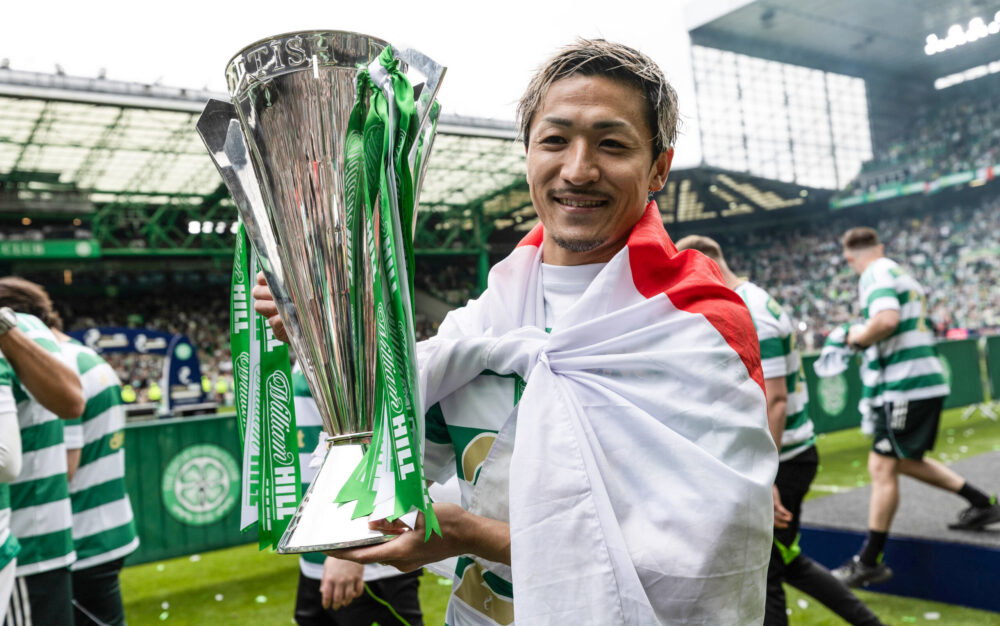
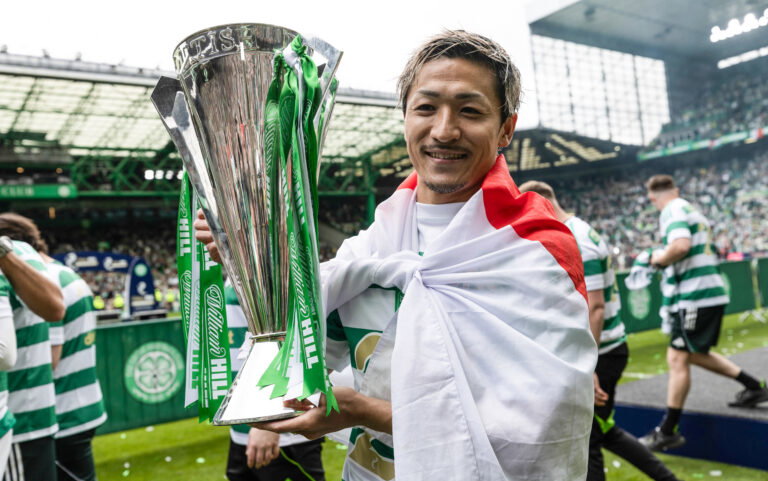
GLASGOW, SCOTLAND - MAY 16: Celtic's Daizen Maeda with the trophy during a William Hill Premiership match between Celtic and Heart of Midlothian at Celtic Park, on May 16, 2026, in Glasgow, Scotland. (Photo by Craig Williamson/SNS Group via Getty Images)
Daizen Maeda’s latest comments will be music to Celtic supporters’ ears.
After months of speculation surrounding his future, the Japanese forward has spoken about wanting to “continue doing my best in Scotland” and how much it means to feel appreciated by Celtic supporters.
It’s exactly the sort of interview fans wanted to hear.
And yet it also raises a bigger question.
Why are we so desperate for him to stay?
Because while Maeda has become one of the most popular players at the club, Celtic’s history suggests that emotional attachment to players can sometimes cloud what is best for the team.
The Supporters Love Daizen Maeda
It’s not difficult to understand why.
Maeda embodies everything supporters admire.
Work rate.
Honesty.
Commitment.
No matter the scoreline, he’s sprinting after lost-cause balls and near half-chances
His recent form only strengthened that bond.
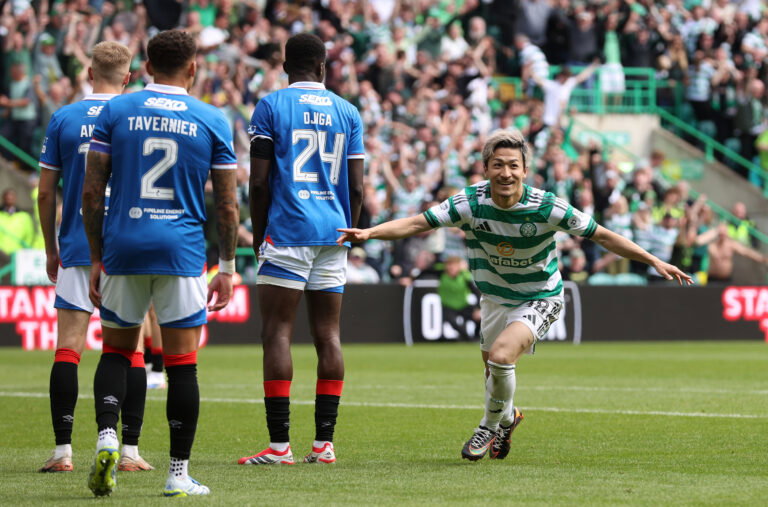
His goal against Hearts helped secure the title.
That overhead kicks against them.
A Scottish Cup Final goal.
A place in Japan’s World Cup squad.
The supporters see a player giving everything for the jersey and naturally want that to continue.
In many ways, Maeda represents the type of footballer supporters wish every player could be.
But football isn’t built on sentiment.
It’s built on evolution.
Why
Why Are We So Afraid Of Letting Players Go?
The reaction to Daizen Maeda’s future has been fascinating.
Not because supporters want him to stay.
That’s understandable.
The interesting part is how terrified we seem to be at the thought of him leaving.
And it’s not a new phenomenon.
Celtic supporters have always fallen in love with players. Sometimes so much that we convince ourselves they are impossible to replace.
We did it with Larsson and Dalglish in the past
And more recently with Van Dijk, Moussa Dembélé, and Edouard. The list goes on.
Every single time there was panic.
Every single time there were predictions that we would never recover.
And every single time the club moved on.
That’s because the biggest clubs don’t stand still.
They evolve.
Perhaps the uncomfortable truth is that, as a support, we can become too emotionally attached to players. We sometimes fall in love with the story, the personality and the memories they create to the point where any suggestion of selling them feels like an attack on the club itself.
It isn’t.
It’s football.
Players come and go.
That’s the reality of Celtic’s place in the modern game.
The danger comes when emotion starts replacing logic. When keeping a player becomes more important than planning for the future. When supporters become so focused on holding onto yesterday’s heroes that they stop thinking about who the next hero might be.
Because Celtic has never been built on one player.
Maeda- The Difference Between Loving A Player And Depending On One
This isn’t an argument for selling Maeda.
Far from it.
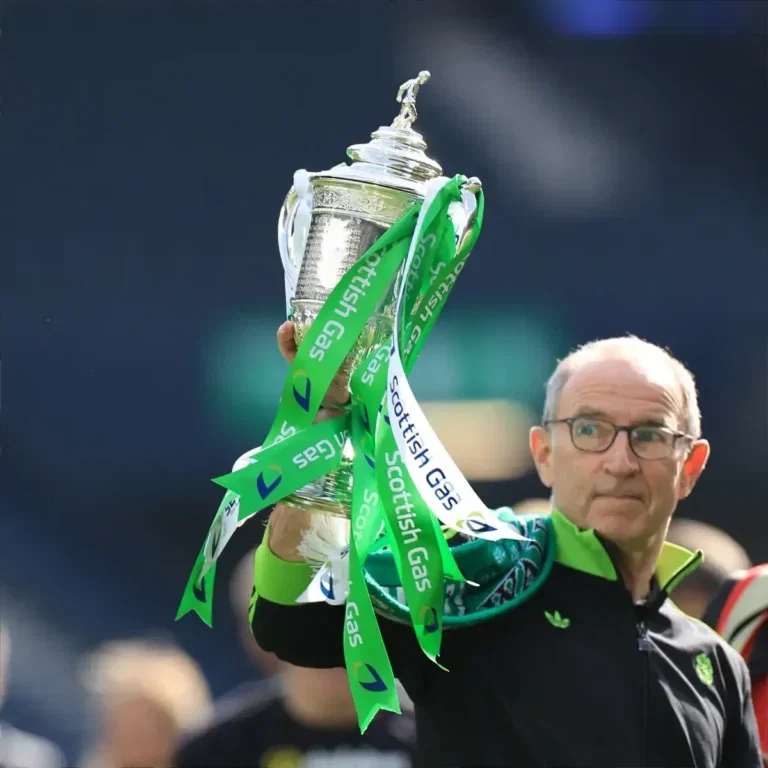
If Martin O’Neill can keep him, he absolutely should.
The issue is the reaction whenever the possibility of losing him emerges.
There’s almost a sense of panic.
As if Celtic couldn’t function without him.
We saw similar reactions when Odsonne Édouard eventually departed five years ago.
The reality is that successful clubs plan for departures before they happen.
They don’t build strategies around hoping players stay forever.
At 28 years old, Maeda is probably closer to the final major move of his career than he is to the start of it.
That doesn’t mean he leaves this summer.
But it does mean Celtic should already be preparing for the possibility.
Action, Not Emotion
The encouraging part of Maeda’s interview wasn’t necessarily the comments about Scotland.
It was what he said about supporters recognising effort.
Because that’s exactly why he’s loved.
He earned it.
The relationship wasn’t built through marketing campaigns or carefully crafted social media posts.
It was built through performances.
Through relentless running.
Through delivering in big moments.
Supporters respect players who give everything.
But perhaps the lesson for Celtic is slightly different.
Supporters should enjoy players while they’re here.
Celebrate them.
Appreciate them.
But never become dependent on them.
Because the club’s biggest successes have always come when it continues moving forward, regardless of who stays and who leaves.
If Daizen Maeda remains at Celtic next season, brilliant.
If he doesn’t, the responsibility falls on the club to find the next player supporters fall in love with.
That’s how successful football clubs operate.
And that’s how Celtic has always survived the departure of its heroes.





Players that love Celtic try a helluva lot more than the likes of Derk Borreghter who stole four years of wages at Parkhead…
That said – Lucan does it without playing !