
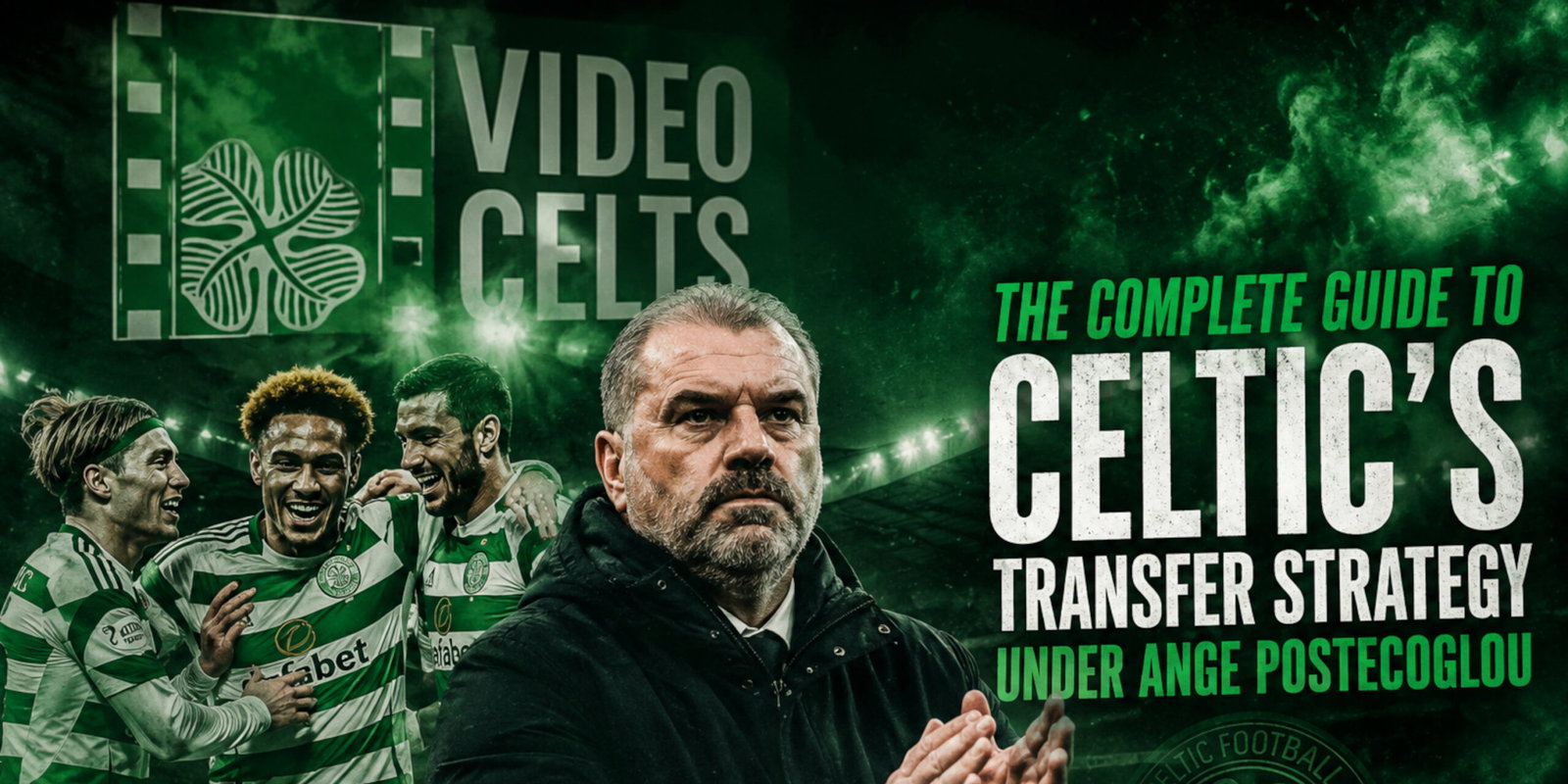
When Ange Postecoglou arrived at Celtic F.C. in the summer of 2021, the club looked tired. Not broken, but drifting. The squad lacked pace, aggression and identity. Recruitment had become reactive rather than proactive. Too many signings felt like compromises. Too many players arrived without a clear role.
Within months, Celtic looked like a completely different football club.
The football was faster. Recruitment was sharper. Players suddenly looked as though they had been chosen for a reason rather than simply collected because they were available. It felt modern again.
As a fan, that was probably the biggest shift. Even before trophies arrived, you could see a coherent plan forming.
This was not simply a manager buying players he liked. Ange rebuilt Celtic’s entire transfer logic.
Ange Changed the Profile of Celtic Signings
Before Postecoglou, Celtic often signed experienced players with patchy resale value or squad players from larger leagues who needed reviving. Some worked brilliantly. Many did not.
Under Ange, the focus changed almost immediately:
- Younger players
- Athletic profiles
- Technical ability under pressure
- Tactical intelligence
- Strong mentality
- High running capacity
- Future resale value
Most importantly, players had to suit the style of football.
That sounds obvious, but football recruitment is full of clubs signing talented players who simply do not fit the system. Ange avoided that trap better than most managers Celtic have had in decades.
Players were selected specifically for aggressive pressing, quick circulation, inverted full-backs and relentless attacking transitions.
The result was a squad where players complemented one another rather than fighting against the structure.
The Japanese Market Was the Masterstroke
The clearest symbol of Ange’s strategy was Celtic’s clear move into the Japanese market.
Many outside Scotland mocked it at first. There was lazy commentary about “shopping in Japan” as though Celtic were simply gambling on obscure players. It lasted about five minutes once the football started.
Key Japanese Signings
| Player | Fee | Outcome |
|---|---|---|
| Kyogo Furuhashi | Around £4.6m | Elite striker, fan favourite |
| Reo Hatate | Around £1.4m | Midfield controller |
| Daizen Maeda | Loan then permanent | Tactical machine |
| Yosuke Ideguchi | Around £770k | Injury-hit, struggled |
| Tomoki Iwata | Around £1m | Useful squad depth |
The brilliance was not simply identifying Japanese talent. Plenty of clubs scout Japan.
The brilliance was timing.
European clubs still undervalued the J League compared to South America or major European competitions. Celtic exploited that inefficiency before many rivals paid attention.
Kyogo alone changed the basic perception of Japanese recruitment in Britain. His movement, pressing intensity and finishing were devastating in Scotland. Hatate brought technical quality Celtic had badly lacked in midfield. Maeda became one of the most tactically valuable forwards in Europe without necessarily being the cleanest finisher.
That mattered because Ange valued function as much as flair.
Recruitment Was Built Around Intensity
One thing became obvious very quickly under Postecoglou. He cared deeply about physical output.
Celtic under Ange played at exhausting speed.
The team pressed aggressively, recycled possession instantly and attacked with numbers. To sustain that style across a Scottish season, players needed enormous stamina and concentration.
That explains several signings that confused supporters initially.
Daizen Maeda, for example, was never signed purely for goals. He was signed because he could destroy opposition build-up patterns for 90 minutes. The forward stretched defensive lines constantly. Maeda turned matches chaotic.
Sometimes fans underestimate how valuable that is until they watch Celtic without it.
Ange recruited players who could survive the demands of his football. That sounds simple, but it is where many possession-based managers fail.
Data and Scouting Worked Together
Celtic did not suddenly become a Moneyball club under Ange, but recruitment clearly became more analytical.
There was a stronger focus on:
- Pressing numbers
- Progressive passing
- Chance creation
- Running output
- Age profile
- Injury history
- Adaptability
At the same time, Ange relied heavily on live scouting and personal knowledge.
That combination was important.
Pure data recruitment can become robotic. Pure instinct recruitment becomes chaotic. Celtic found a healthier balance during this period.
You could often see the logic behind signings even when they did not fully work out.
Celtic Started Buying Before Panic Set In
One of the most underrated changes under Ange was timing.
For years, Celtic fans had become accustomed to transfer windows that felt painfully slow. Deadlines approached, qualifiers loomed and panic spread across the support.
Under Postecoglou, business was often completed early.
That gave players time to adapt tactically and physically before the season exploded into chaos.
The 2022 summer window was particularly strong:
| Player | Approx Fee | Impact |
|---|---|---|
| Cameron Carter-Vickers | £6m | Defensive leader |
| Jota | £6m | Match winner |
| Alexandro Bernabei | £3.75m | Mixed |
| Sead Haksabanovic | £1.7m | Useful depth |
| Aaron Mooy | Free | Outstanding short-term value |
The permanent deals for Carter-Vickers and Jota were massive statements. Celtic were no longer acting like a club terrified to spend. They were investing in proven success.
As a fan, that felt refreshing. Celtic looked decisive rather than hesitant.
Ange Valued Personality and Mentality
One thing former players repeatedly mentioned was dressing-room culture.
Ange wanted humble, hard-working players who accepted tactical discipline. Ego did not seem particularly welcome.
That probably explains why certain talented players never truly fit.
Under Postecoglou, Celtic became mentally tougher. The squad looked calmer under pressure. Domestic games stopped feeling frantic because the team trusted the system.
That cultural reset fundamentally mattered just as much as tactical changes.
You could see it in recruitment interviews too. Players constantly referenced clarity. They knew why they had been signed.
That is surprisingly rare in modern football.
The Strategy Was Also About Resale Value
Celtic’s business model has basically always involved player trading to some extent, but Ange refined it.
The ideal signing became:
- Between 21 and 26
- Relatively affordable
- Technically developed
- Physically intense
- Capable of improving further
- Attractive to larger leagues later
Jota eventually left for huge money. Matt O’Riley developed into one of Europe’s most valuable midfield assets. Even players like Hatate and Kyogo massively increased their market reputation.
Celtic were building sporting success and asset growth simultaneously.
That balance is difficult.
Too much focus on resale value weakens teams. Too much focus on short-term success damages sustainability. Ange arguably found the best middle ground Celtic have managed since the Martin O’Neill years.
Not Every Signing Worked
It would be dishonest to pretend Ange got everything right.
Yosuke Ideguchi struggled badly with injuries and adaptation. Bernabei never fully convinced defensively. Bernabei barely featured. Oliver Abildgaard felt like a temporary solution rather than a long-term fit.
But even the failures usually made sense conceptually.
That is an important distinction.
Fans can accept unsuccessful signings when the logic behind them is clear. The frustration usually comes when recruitment feels random or disconnected from the manager’s football.
Under Ange, Celtic rarely looked directionless in the market.
The Financial Context Matters
Celtic could not compete financially with the Premier League or elite European clubs. Postecoglou understood that immediately.
Instead of chasing players Celtic could never realistically attract, recruitment focused on finding value before the wider market reacted.
That included:
- Japan
- South Korea
- Emerging European leagues
- Young domestic talent
- Loan-to-buy structures
- Players overlooked by bigger clubs
It was intelligent rather than glamorous.
And honestly, that suits Celtic historically. The club has often thrived most when it moved faster and smarter than richer rivals.
Ange Restored Trust in Recruitment
This may have been his biggest achievement.
By the end of his spell, Celtic supporters largely trusted the process again.
That had disappeared for a while before he arrived.
Fans stopped panicking every time an unfamiliar player was linked because there was evidence the recruitment department actually understood the tactical plan.
When someone like Oh Hyeon-gyu arrived, supporters were curious rather than sceptical. That is a huge cultural shift.
Recruitment became part of the excitement again.
The Lasting Legacy of Ange’s Transfer Strategy
Even after Postecoglou left for Tottenham Hotspur F.C., many elements of his recruitment philosophy remained embedded at Celtic.
That says everything.
The best managers do not simply improve results. They alter structures.
Ange certainly modernised Celtic’s scouting focus, improved recruitment coherence and showed the club could dominate domestically while still building long-term value.
He also reminded supporters that clever recruitment is not about spending the most money. It is about understanding exactly what your team needs and finding players brave enough to execute it.
And if we are being honest as Celtic fans, there was something deeply enjoyable about watching half of Scottish football dismiss these signings before kick-off, only for Kyogo to be celebrating in front of them twenty minutes later.
Football can be wonderfully predictable sometimes.
The Key Takeaway
Ange Postecoglou’s transfer strategy worked because it was definitively aligned with everything else.
The scouting matched the tactics. The tactics matched the fitness demands. The fitness demands matched the mentality of the players being signed.
There was coherence.
That word probably defines the entire era more than anything else.
Celtic were not just buying players under Ange. They were building a football identity again.







If memory serves big Ange had brought 3 players in the door in his first 2 weeks of his tenure ….in a lightening quick fashion ? The message to other clubs and clumpany was ‘ catch my dust ‘ presumably ? Faster than Andy Halliday’s hair growing back seemingly onto his bare bonce ! Or is that his vanity ‘syrup ? ‘