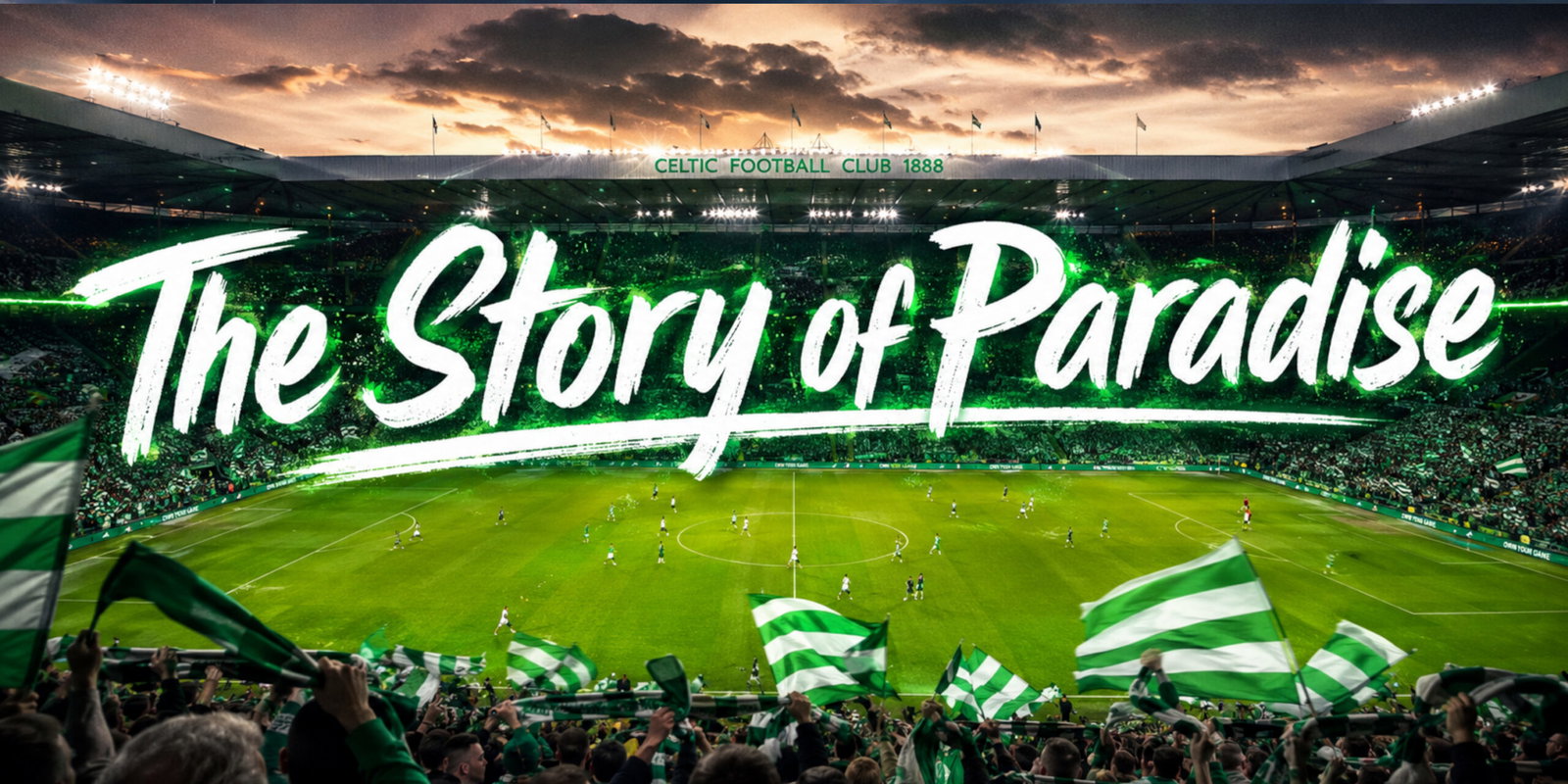
Some stadiums are impressive because they are modern. Some because they are expensive. Celtic Park is different. Its power comes from history, memory and the feeling that generations of supporters have left something behind every time they walked through the gates.
Known simply as Paradise, Celtic Park has been the home of Celtic Football Club since 1892. It has seen legendary players, European triumphs, painful defeats, dramatic rebuilds and crowds that have turned ordinary matches into unforgettable occasions.
As a football fan, there are grounds you admire and grounds you feel. Celtic Park belongs firmly in the second category. Even supporters with no connection to Celtic often talk about the noise, the scale and that unusual sense that the stadium has its own personality.
The First Celtic Park: The Birth Of A Club And A Community
Celtic Football Club was founded in 1887 by Brother Walfrid, with the aim of helping relieve poverty among the Irish immigrant community in Glasgow’s East End.
The original Celtic Park opened in 1888, close to the site of the modern stadium. Celtic’s first match there was against Rangers on 28 May 1888, a 5-2 victory for the new club.
That early ground was very different from today’s arena. Football stadiums of the Victorian era were basic, often built quickly to serve rapidly growing crowds.
The first Celtic Park included:
- Open terracing
- Basic spectator facilities
- A cycling track around the pitch
- Wooden structures typical of the period
Celtic quickly became popular, and the club needed a larger home almost immediately.
The Move To The Current Celtic Park In 1892
A dispute over rent led Celtic to leave their first ground. The club moved a short distance away and built a new stadium on the current site.
The new Celtic Park opened on 20 August 1892.
The move famously prompted the remark that it was like “moving from the graveyard to paradise”, helping create the famous nickname that remains more than 130 years later.
The stadium was ambitious for its time. Celtic were not just creating a football pitch. They were building a permanent home.
Early Celtic Park featured:
| Feature | Detail |
|---|---|
| Opened | 1892 |
| Location | Parkhead, Glasgow |
| Original purpose | Home of Celtic FC |
| Early design | Terracing and pavilion-style structures |
| Nickname | Paradise |
The Rise Of A Giant: Celtic Park In The Early 20th Century
As Celtic grew into one of Scotland’s dominant clubs, Celtic Park expanded with them.
The early 1900s saw major improvements as football became a mass spectator sport. Terraces expanded and attendances increased dramatically.
Before television transformed football, stadium crowds were enormous. Celtic Park regularly hosted attendances that modern safety regulations would never allow.
Historic crowd milestones include:
- Regular crowds above 60,000 during major fixtures
- Several matches attracting more than 80,000 supporters
- An official record attendance of 92,000 for an Old Firm match against Rangers in 1938, although some historical sources give the figure as 83,500
Those numbers are astonishing today. Imagine the modern stadium, already one of Britain’s biggest, with thousands more packed inside. Incredible atmosphere, although probably not ideal if you fancied leaving quickly at full time.
Celtic Park And The Lisbon Lions Era
The 1960s brought Celtic Park into a golden age.
Under manager Jock Stein, Celtic became one of the most exciting teams in Europe. The stadium became the home of the famous Lisbon Lions, the side that won the 1967 European Cup.
That team was extraordinary because every player was born within roughly 30 miles of Celtic Park.
Legends from the era included:
- Billy McNeill
- Jimmy Johnstone
- Bobby Lennox
- Bertie Auld
- Tommy Gemmell
European nights at Celtic Park became part of football folklore. Visiting sides discovered that the stadium was not simply loud. It was relentless.
The Old Terraces And The Jungle
Before the modern redevelopment, one section defined Celtic Park more than any other: The Jungle.
The Jungle was the covered terraced area opposite the main stand and became the emotional centre of the stadium.
It was famous for:
- Constant singing
- Humour from supporters
- Intimidating noise
- Generations of regular match-going fans
Modern stadiums offer comfort, safety and better facilities, but many older Celtic supporters still speak about The Jungle with huge affection.
Football lost something when the great terraces disappeared. It gained many things too, especially safety and accessibility, but those old stands carried a rawness that cannot really be recreated.
The 1990s Rebuild: Saving And Transforming Celtic Park
By the early 1990s, Celtic Park needed major change.
The Taylor Report after the Hillsborough disaster transformed British football stadium requirements. All-seater stadiums became the future, and Celtic faced the challenge of modernising an ageing ground.
When Fergus McCann took control of Celtic in 1994, redeveloping Celtic Park became one of his biggest projects.
The transformation was dramatic.
The rebuild included:
- Three new major stands
- Increased hospitality areas
- Modern seating
- Improved safety standards
- Better supporter facilities
The redevelopment was completed in 1998, when the Jock Stein Stand opened, completing the transformation of Celtic Park into a modern 60,000-seat stadium.
Celtic Park Today: Capacity And Design
Modern Celtic Park combines old identity with large-scale stadium design.
Current stadium facts:
| Category | Detail |
|---|---|
| Capacity | Around 60,000 |
| Stands | North Stand, Main Stand, Lisbon Lions Stand, Jock Stein Stand |
| Pitch size | Approximately 105m x 68m |
| Stadium type | All-seater football stadium |
| Owner | Celtic FC |
The huge three-tier North Stand dominates the ground visually, while the older Main Stand preserves a link with Celtic Park’s earlier eras.
It is not the most futuristic stadium in Europe, but that is partly the appeal. Celtic Park still feels like a football ground rather than an entertainment complex.
Famous European Nights At Celtic Park
Celtic Park’s reputation internationally has largely been built through European football.
Some memorable nights include:
Celtic 2-1 Barcelona, 2012
One of the stadium’s defining modern moments. Celtic defeated Lionel Messi’s Barcelona with a disciplined defensive performance and unforgettable atmosphere.
Celtic 1-0 Manchester United, 2006
Shunsuke Nakamura’s free kick remains one of the great Champions League moments at Paradise.
Celtic 4-3 Juventus, 2001
A classic attacking European contest during Martin O’Neill’s first spell.
European opponents frequently mention the atmosphere because Celtic Park feels different on those nights. The noise does not just come from volume. It comes from anticipation.
The Atmosphere: Why Celtic Park Has Such A Reputation
The stadium’s atmosphere comes from several factors:
- Steep stands close to the pitch
- Strong supporter traditions
- Generations of family attendance
- Club identity linked closely with community
- Major European memories
The introduction of safe standing in 2016 added another element, with the Green Brigade section bringing organised displays, colour and constant noise.
Not every match reaches the mythical levels people talk about. A routine league game on a cold afternoon is still a routine league game. But when Celtic Park is fully switched on, very few stadiums in world football compare.
Celtic Park Beyond Football
Although football defines the stadium, Celtic Park has hosted many other events.
These include:
- Scotland international fixtures
- 2014 Commonwealth Games opening ceremony
- Major concerts
- Charity events
Its location in Glasgow’s East End also connects it closely with local regeneration projects and community programmes.
Future Of Celtic Park
Discussion about Celtic Park’s future often focuses on whether further expansion is possible.
The Main Stand is the area most frequently mentioned because the other three sides were rebuilt during the 1990s.
Potential future improvements could include:
- Increased capacity
- Expanded hospitality
- Improved concourses
- Enhanced digital facilities
- Environmental upgrades
Any redevelopment would need to balance modern football demands with preserving what makes Celtic Park special.
Bigger is not automatically better. Some stadiums become technically brilliant but lose their character. Celtic’s challenge is making Paradise more modern without sanding away its edges.