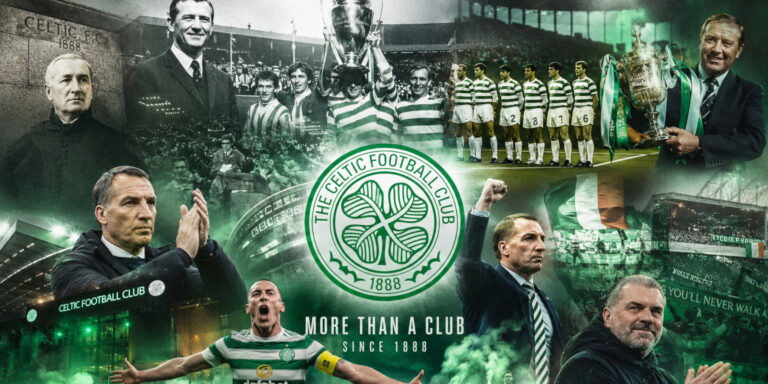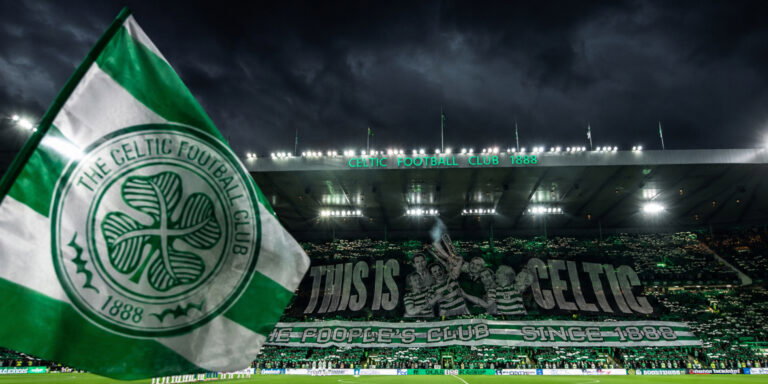
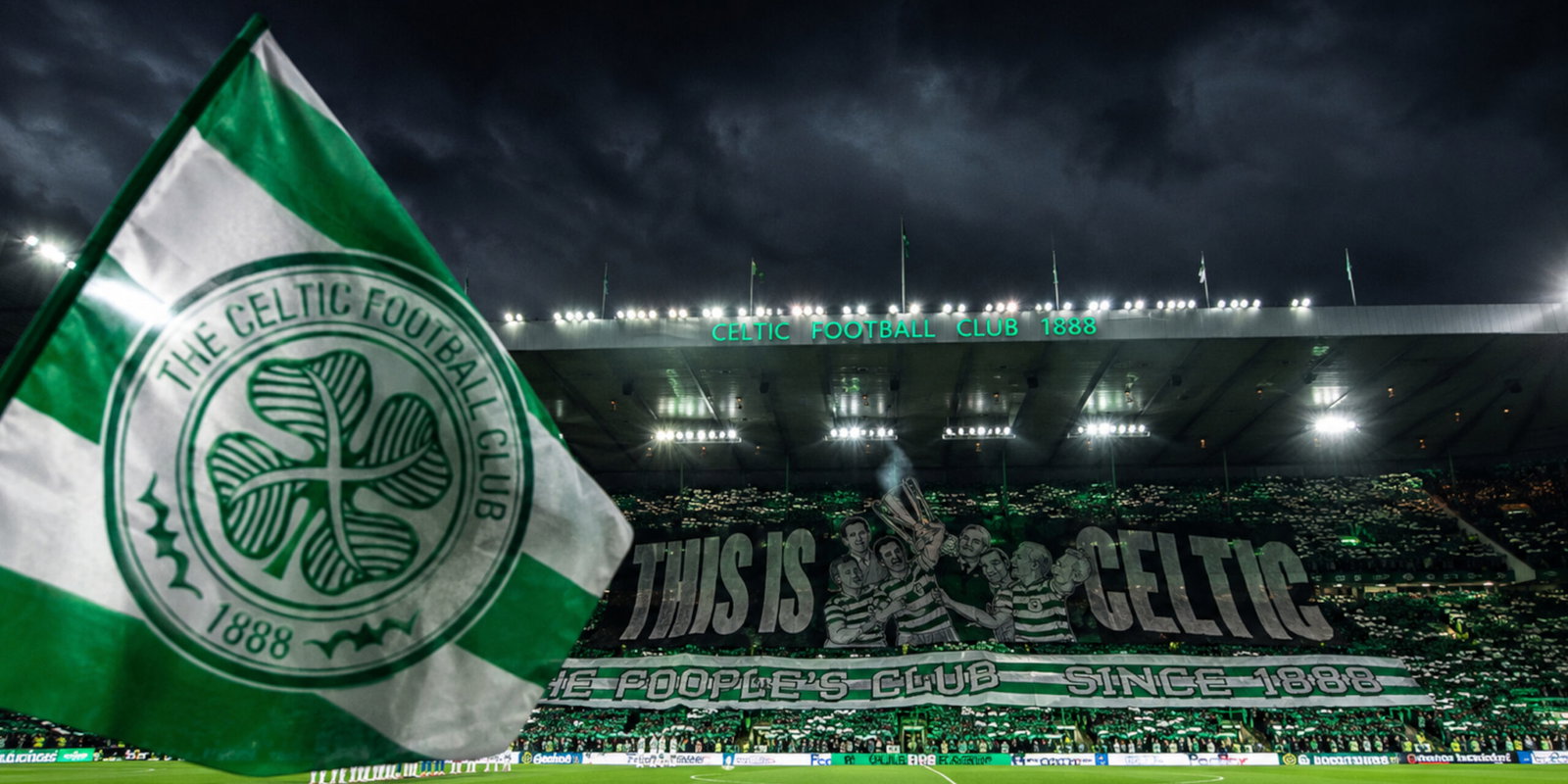
Few football clubs carry their European history quite like Celtic.
Across almost six decades of continental competition, Celtic have experienced exhilarating triumphs, heartbreaking defeats, unforgettable atmospheres and moments that have become woven into football folklore. Supporters often speak about “European nights at Celtic Park,” and for good reason. There is something different about them. The floodlights feel brighter, the crowd louder, and every challenge somehow carries greater weight.
Supporting Celtic in Europe has never been easy. It has demanded hope, patience and occasionally a remarkable tolerance for last minute heartbreak. Yet that is precisely why the great nights matter so much. They become shared memories across generations.
From becoming the first British club to lift the European Cup in Lisbon to modern victories over some of Europe’s biggest clubs, Celtic’s continental story remains one of football’s richest traditions.
Celtic’s European Record at a Glance
| Competition | Best Achievement |
|---|---|
| European Cup / Champions League | Winners (1967) |
| UEFA Cup / Europa League | Finalists (2003) |
| European Cup Winners’ Cup | Semi-finals |
| UEFA Conference League | Knockout stage appearance |
| Total European Matches | Over 380 |
| European Wins | More than 170 |
| European Goals | Over 600 |
No Scottish club has consistently produced as many memorable European occasions.
The Beginning of Celtic’s European Journey
Celtic entered European competition during the 1960s, just as Jock Stein was transforming the club.
Stein’s philosophy was remarkably ambitious for the era.
Rather than approaching continental football cautiously, Celtic attacked opponents with pace, width and relentless movement. Full backs overlapped, midfielders pressed aggressively and forwards constantly looked to score.
Many European sides simply had no answer.
Within only a few seasons, Celtic had become one of the strongest teams anywhere in Europe.
Lisbon 1967: The Greatest Night in Celtic History
Nothing can ever eclipse Lisbon.
On 25 May 1967, Celtic defeated Inter Milan 2-1 to win the European Cup.
It remains one of football’s greatest achievements.
Everything about the victory feels almost mythical.
- Every member of the starting eleven had been born within roughly thirty miles of Celtic Park.
- Celtic became the first British club to win the European Cup.
- They defeated the masters of Italian defensive football by relentlessly attacking from the opening whistle.
- Tommy Gemmell and Stevie Chalmers scored the goals that changed history.
Inter took an early lead from a penalty before retreating into their famous defensive system.
Celtic responded with wave after wave of attacks.
Watching the match today, it is astonishing how modern Stein’s team appears. The movement, pressing and attacking ambition would not look out of place decades later.
Billy McNeill eventually lifted the trophy, while the players became immortal as the Lisbon Lions.
No Scottish sporting achievement has ever quite matched it.
The Road to Lisbon
The final often dominates discussion, but the journey itself deserves equal recognition.
Celtic defeated:
| Round | Opponent | Result |
|---|---|---|
| First Round | Zürich | Won |
| Second Round | Nantes | Won |
| Quarter-final | Vojvodina | Won |
| Semi-final | Dukla Prague | Won |
| Final | Inter Milan | Won 2-1 |
The semi-final against Dukla Prague was especially significant.
Facing one of Europe’s strongest sides, Celtic displayed remarkable discipline away from home before finishing the job at Hampden.
Reaching Another European Cup Final in 1970
The Lisbon Lions were no one-season wonder.
Three years later, Celtic reached another European Cup Final.
After eliminating Benfica and Leeds United, they faced Feyenoord in Milan.
Sadly, the Dutch side won 2-1 after extra time.
Although defeat hurt, reaching two European Cup Finals in four seasons confirmed Celtic as one of Europe’s elite clubs.
European Semi-finals Throughout the 1970s
The 1970s remained a remarkable period.
Celtic reached multiple European Cup semi-finals and consistently challenged Europe’s strongest clubs.
Many supporters still wonder what might have happened had one or two key refereeing decisions gone differently.
Margins at the highest level are often incredibly small.
The Long Wait
After the glory years came frustration.
Financial changes gradually widened the gap between Scotland and Europe’s wealthiest leagues.
Qualification became harder.
Winning became harder.
Keeping elite players became harder.
Yet European nights remained special.
Supporters continued filling Celtic Park regardless of the opposition or the odds.
That loyalty became one of the club’s defining strengths.
Blackburn Rovers, 2002
Martin O’Neill’s Celtic side announced themselves with authority.
A dramatic victory over English champions Blackburn Rovers carried enormous significance.
Henrik Larsson, Chris Sutton and John Hartson formed one of Europe’s most physically imposing attacking trios.
The atmosphere across both legs was unforgettable.
For many younger supporters, this was the beginning of a new European adventure.
The Road to Seville
The 2002-03 UEFA Cup campaign remains one of Celtic’s finest modern achievements.
Celtic defeated:
| Round | Opponent |
|---|---|
| First Round | FK Suduva |
| Second Round | Blackburn Rovers |
| Third Round | Celta Vigo |
| Fourth Round | VfB Stuttgart |
| Quarter-final | Liverpool |
| Semi-final | Boavista |
Every round seemed to produce another unforgettable moment.
Alan Thompson’s header against Stuttgart.
Henrik Larsson’s brilliance against Liverpool.
John Hartson bullying defenders across Europe.
Martin O’Neill built a side perfectly suited to knockout football.
Seville 2003
The UEFA Cup Final against Porto remains bittersweet.
Around 80,000 Celtic supporters travelled to Spain.
The city became a sea of green and white.
Larsson twice equalised.
Porto eventually won 3-2 after extra time.
Although the trophy escaped Celtic, the supporters won worldwide admiration for their behaviour throughout the tournament.
The FIFA Fair Play Award recognised what everyone present had witnessed.
It remains one of the proudest moments in the club’s history despite ending in defeat.
Champions League Nights That Defined an Era
Celtic 1-0 Barcelona (2004)
Alan Thompson’s winner stunned Frank Rijkaard’s Barcelona.
It proved Celtic Park could unsettle even Europe’s finest teams.
Celtic 1-0 Manchester United (2006)
One free kick.
One perfect strike.
Shunsuke Nakamura’s curling effort secured qualification for the Champions League knockout stages.
The roar that followed remains one of the loudest ever heard inside Celtic Park.
Celtic 2-1 AC Milan (2007)
The reigning European champions arrived expecting to progress.
Instead, Aiden McGeady inspired a famous victory before Scott McDonald scored the decisive goal in late on.
It remains one of the club’s greatest knockout victories.
Celtic 2-1 Barcelona (2012)
Perhaps the greatest modern European night.
Barcelona dominated possession with Lionel Messi orchestrating attacks throughout.
Celtic defended heroically.
Victor Wanyama headed the opener.
Teenage substitute Tony Watt scored one of the most famous goals in Celtic history.
Messi pulled one back late on, but Celtic held firm.
Statistically, Barcelona controlled almost every metric.
The scoreboard told a different story.
Sometimes football refuses to follow probability.
Lazio 1-2 Celtic (2019)
Neil Lennon’s side produced one of the finest away performances of the modern era.
Olivier Ntcham’s late winner sparked extraordinary celebrations among the travelling support.
Winning in Rome against Lazio showed Celtic could still produce memorable European away victories.
The Greatest Individual European Performers
Henrik Larsson
No modern Celtic player defined European football more.
His movement, finishing and intelligence consistently troubled elite defenders.
European goals for Celtic: 35
Billy McNeill
Captain.
Leader.
European Cup winner.
His influence extended far beyond lifting the trophy.
Jimmy Johnstone
Few wingers have ever entertained European audiences more.
Opponents knew exactly what he intended to do.
Stopping him proved another matter entirely.
Shunsuke Nakamura
His technical quality transformed numerous Champions League matches.
His free kick against Manchester United remains iconic.
Scott Brown
Brown represented Celtic through multiple Champions League and Europa League campaigns.
His leadership often inspired performances beyond expectations.
Celtic Park Under the Lights
There is constant debate about Europe’s greatest football atmospheres.
Anfield.
Signal Iduna Park.
San Siro.
Few visiting players leave Celtic Park without mentioning the crowd.
Several opponents have openly admitted the atmosphere affected communication, concentration and decision making.
Supporters sometimes underestimate how valuable that emotional energy becomes over ninety minutes.
It cannot compensate for technical differences forever, but on individual nights it can narrow enormous financial gaps.
The Numbers Behind Celtic’s European Legacy
| Record | Achievement |
|---|---|
| First British European Cup winners | 1967 |
| European Cup Finals | 2 |
| UEFA Cup Final | 1 |
| European Semi-finals | Multiple |
| Champions League group stage appearances | More than 10 |
| Biggest European crowd | Over 136,000 at Hampden during the 1970 European Cup semi-final |
| Most famous away support | Seville 2003 |
These figures tell only part of the story.
Many clubs have won more trophies.
Very few have built such a distinctive European identity.
Why Celtic Continue to Matter in Europe
Modern football is increasingly shaped by television money and financial inequality.
Scottish clubs face challenges unimaginable during the 1960s.
Yet Celtic continue to compete, qualify for European competition and occasionally produce nights that remind everyone why football remains unpredictable.
Every generation seems to create at least one match that supporters never forget.
That continuity matters.
The opponents change.
The competitions evolve.
The songs remain the same.
The Legacy of Celtic’s European Nights
European football has given Celtic some of its greatest triumphs and its deepest heartbreak.
Lisbon established immortality.
Seville demonstrated dignity in defeat.
Barcelona, Manchester United, AC Milan and Lazio each provided fresh chapters that younger supporters could call their own.
As a fan, I sometimes think the anticipation is almost as memorable as the result. Walking towards Celtic Park before a European match, hearing snippets of conversation about team selections, old victories and impossible dreams, you feel connected to everyone who has made that same journey before. Football does not always reward optimism, but Celtic’s European history has taught generations of supporters that extraordinary nights are always possible.
That belief has survived changing eras, changing squads and changing competitions.
It is why every time the Champions League anthem begins to play in the East End of Glasgow, hope arrives with it.