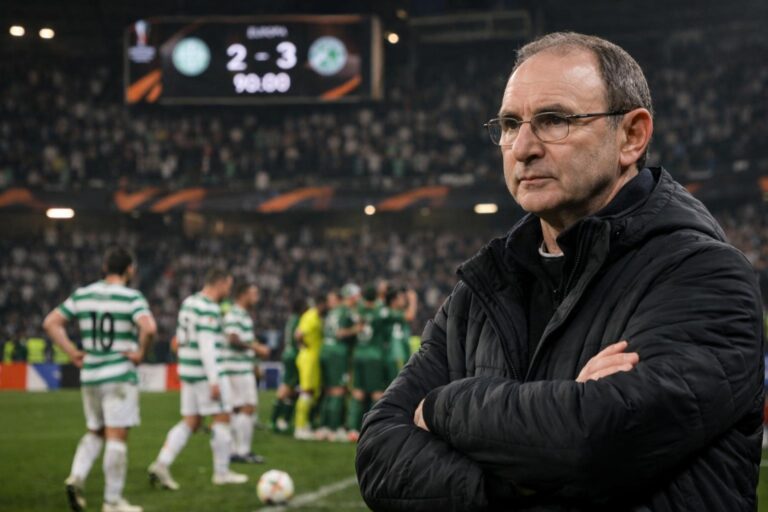

Celtic Football Club is more than a football institution in Glasgow. Its history stretches across generations, connecting sporting achievements, community identity and a supporter culture recognised throughout Europe. Founded in the nineteenth century, the club has experienced extraordinary victories, painful defeats and moments that have become part of football folklore. For regular readers of Video Celts, these stories are familiar territory, but even devoted supporters may find something surprising in the details behind them.
The modern Celtic following also exists in a global digital environment. Supporters follow matches, exchange opinions, examine statistics and access sports platforms from different countries, often during the same major fixture. Services such as 1xBet illustrate the scale of online sports infrastructure, where secure account access, reliable processing and the ability to handle simultaneous user activity are important technical requirements. This wider digital environment has changed how international football audiences stay connected with their favourite clubs.
1. Celtic Was Founded to Address Poverty in Glasgow
One of the most interesting facts about Celtic is that its origins were closely connected to charitable work rather than commercial football ambitions.
The club was formally constituted on November 6, 1887, at St Mary’s Church Hall in Glasgow’s East End. Its principal founder was Brother Walfrid, a Marist religious brother who wanted to raise funds to support impoverished families in the local community.
At the time, the East End faced serious social and economic difficulties. Many residents struggled to afford basic necessities, and the area had a substantial Irish immigrant population. Football offered an opportunity to bring people together while generating money for charitable initiatives.
Several details make this origin story particularly interesting:
- The club’s original purpose included raising money to provide meals for disadvantaged children.
- The name Celtic reflected the cultural connections between Scotland and Ireland.
- The first official match took place on May 28, 1888, against Rangers, with Celtic winning 5-2.
- Neil McCallum scored the first goal in the club’s history.
This charitable background remains an important part of Celtic’s identity. The modern Celtic FC Foundation continues community initiatives inspired by the original vision of Brother Walfrid.
The story also explains why many supporters see the club as something considerably bigger than a football team. Its founding principles helped establish a connection between the institution and the communities that have supported it for more than a century.
2. The Lisbon Lions Created a Record That Changed British Football
May 25, 1967, remains one of the most significant dates in Celtic’s history. On that evening, the Glasgow side defeated Inter Milan 2-1 in Lisbon to become the first British club to win the European Cup.
The achievement was remarkable not only because of the result but also because of the circumstances surrounding the team.
Managed by Jock Stein, Celtic reached the final after overcoming FC Zurich, Nantes, Vojvodina and Dukla Prague. Their opponents, Inter Milan, were among the strongest European sides of the period and were widely associated with a defensive approach known as catenaccio.
Celtic conceded an early penalty, but the team responded with attacking football that eventually changed the match. Tommy Gemmell equalised in the 63rd minute before Stevie Chalmers scored the winning goal in the 83rd minute.
The players became known as the Lisbon Lions. One particularly fascinating detail is that every member of the winning team had been born within approximately 30 miles of Celtic Park.
Their achievement was also part of a remarkable domestic campaign. During the 1966/67 season, Celtic won five trophies:
- Scottish League Championship.
- Scottish Cup.
- Scottish League Cup.
- Glasgow Cup.
- European Cup.
This remains a defining example of how a relatively local group of players reached the highest level of European football.
Celtic returned to the European Cup final in 1970, facing Feyenoord. This time, however, the Scottish side lost 2-1 after extra time. The Lisbon triumph nevertheless secured the club’s place among the most historically significant teams in European football.
3. Celtic Park Has Witnessed Extraordinary Football Crowds
Celtic Park, commonly known among supporters as Paradise, has been the club’s home since 1892. The stadium has undergone several redevelopment projects and is now one of the largest football grounds in the United Kingdom, with a capacity of approximately 60,000.
However, its historical attendance figures are even more remarkable.
On April 24, 1937, Celtic faced Aberdeen in the Scottish Cup final at Hampden Park. The match attracted an official attendance of 146,433, setting a British record for a club football match.
Celtic won 2-1, with Johnny Crum and Willie Buchan scoring the goals. The attendance remains one of the most extraordinary figures in British football history.
Other interesting Celtic Park facts include:
- The stadium replaced the club’s original home after Celtic moved across the road in 1892.
- Its traditional nickname, Paradise, has become deeply embedded in supporter culture.
- The ground has been redeveloped several times to accommodate changing stadium requirements.
- The atmosphere during major European fixtures is frequently regarded as one of the defining features of a Celtic home match.
For supporters, Celtic Park represents a connection between generations. Families have attended matches together for decades, passing down traditions, favourite songs and memories of important victories.
The stadium’s significance is therefore not measured only by its capacity or architectural development. Its historical identity is closely tied to the people who fill its stands.
4. Celtic’s Record Goalscorer Had an Extraordinary Career
Jimmy McGrory is one of the most remarkable figures in Celtic’s history. His scoring record remains a major talking point among supporters and football historians.
McGrory made 445 appearances for Celtic and scored 468 goals. That is an extraordinary return for any striker, particularly considering the football conditions and playing styles of his era.
Some of the most impressive details from his career include:
- He scored 395 league goals in 378 appearances.
- He added another 73 goals in 67 Scottish Cup matches.
- He regularly finished seasons as Celtic’s leading goalscorer.
- He scored eight goals in a single match against Dunfermline Athletic in January 1928.
His connection with Celtic went beyond his playing career. McGrory later returned to the club as manager in 1945 and remained in that position until 1965.
Another fascinating historical detail concerns his proposed move to Arsenal in 1928. Despite interest from the English club, McGrory remained at Celtic. His loyalty became an important part of his reputation among supporters.
Today, his record provides an interesting reminder of how football statistics can preserve the achievements of players long after their careers have ended.
5. The Seville Journey Showed the Scale of Celtic’s Global Support
Celtic’s supporters have built a reputation for travelling in significant numbers, particularly during important European campaigns. One of the clearest examples came in May 2003, when the club reached the UEFA Cup final against Porto.
The final took place in Seville, Spain, on May 21. More than 75,000 Celtic supporters travelled to the city, according to UEFA, with other historical estimates placing the travelling following at around 80,000.
The match itself ended in disappointment. Porto won 3-2 after extra time, with Derlei scoring the decisive goal late in the game.
Yet the result was only one part of the story. Celtic supporters transformed Seville into a sea of green and white, creating an atmosphere that attracted international attention.
The campaign also produced several memorable victories:
- Blackburn Rovers were eliminated after two matches.
- Celta Vigo were defeated through the away-goals rule.
- Stuttgart were beaten in a five-goal aggregate contest.
- Liverpool were eliminated in the quarter-finals.
- Boavista were overcome in the semi-finals.
Celtic eventually lost the final, but the supporters received widespread recognition for their conduct. The club’s travelling support was awarded the 2003 FIFA Fair Play Award.
For many fans, Seville remains one of the most memorable European journeys in the club’s modern history. It demonstrated that a team’s influence can extend far beyond the number of trophies in its cabinet.
Why These Facts Still Matter to Celtic Supporters
The history of Celtic FC contains much more than famous results and championship celebrations. Its origins in charitable work, the achievements of the Lisbon Lions, the remarkable records of individual players and the commitment of its international following all contribute to the club’s identity.
These stories also explain why Celtic continues to attract attention from football audiences around the world. Supporters are not simply following the next fixture; they are participating in a tradition shaped by more than 130 years of history.
For long-standing fans, these facts provide another reason to appreciate the club’s heritage. For newer followers, they offer a useful introduction to the people, matches and events that made Celtic one of the most recognisable names in Scottish football.
Image Source: unsplash.com