
The Men Who Led Celtic: Ranking the Club’s Greatest Captains
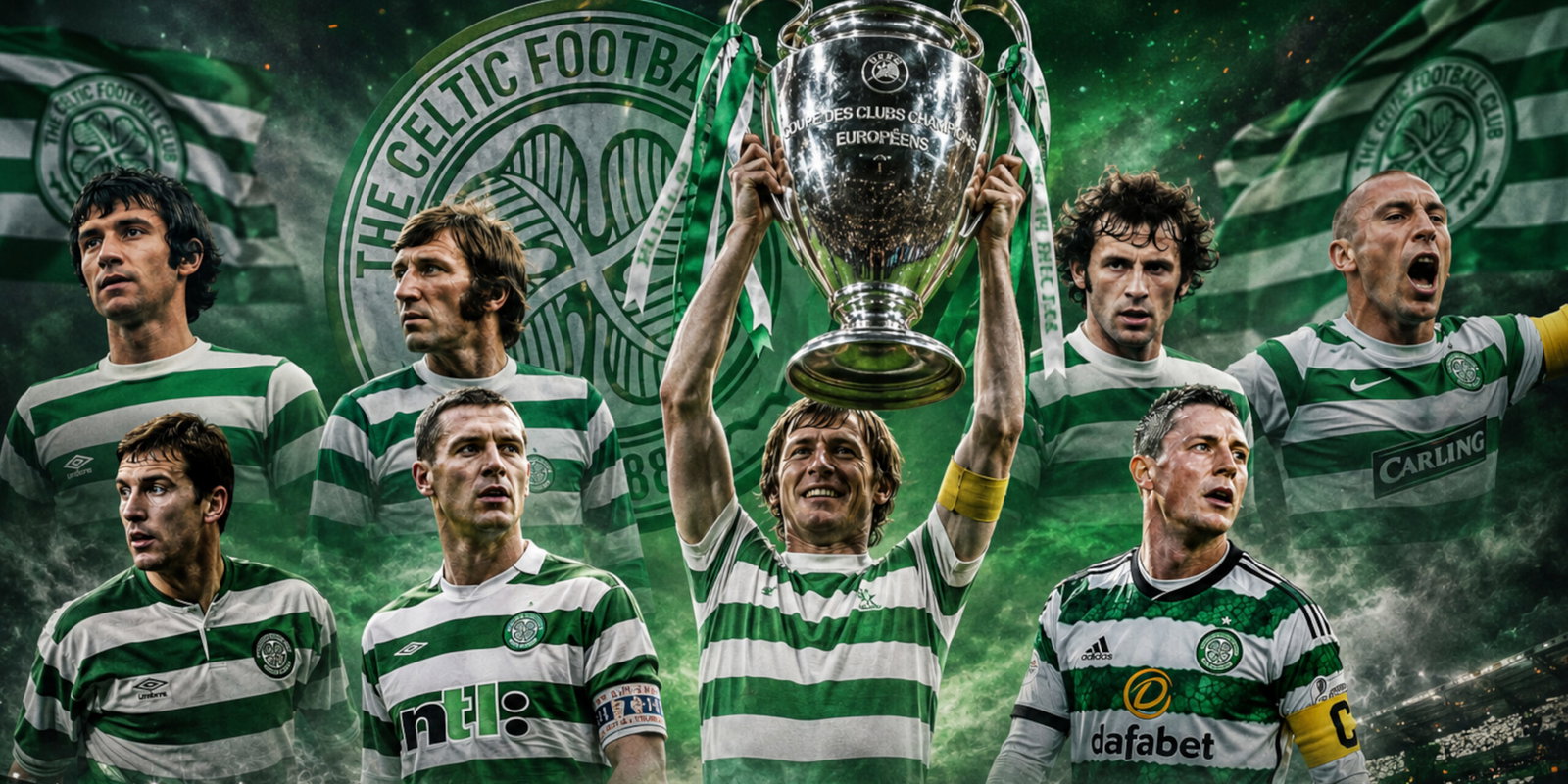
Wearing the armband at Celtic is about far more than calling heads or tails before kick-off. It means carrying the expectations of tens of thousands every weekend, understanding the weight of the shirt, and setting standards that teammates cannot ignore. Some captains lift trophies. The truly special ones build cultures that survive long after they retire.
Looking back through Celtic’s history, certain names stand above the rest. They led during eras of domestic dominance, European glory, rebuilding, and revival. Comparing generations is never easy, but influence, longevity, success, and leadership provide a useful guide.
What Makes a Great Celtic Captain?
Not every brilliant footballer becomes a great captain.
The best Celtic captains usually share several qualities:
- Leadership under pressure
- Consistency across multiple seasons
- Success in major competitions
- Respect from teammates and supporters
- An understanding of Celtic’s identity
- The ability to inspire performances in the biggest matches
Some captains were vocal organisers. Others led almost entirely through performances. Both approaches have produced unforgettable leaders.
Billy McNeill
The benchmark for every captain
No discussion begins anywhere else.
Billy McNeill remains the greatest captain in Celtic’s history because nobody has matched what he achieved.
Captaining the Lisbon Lions to victory in the 1967 European Cup instantly secured his place among football’s greatest leaders. Celtic became the first British club to win Europe’s biggest prize, doing so with a squad made entirely of players born within roughly thirty miles of Glasgow.
That achievement alone would guarantee legendary status.
It becomes even more remarkable when considering the wider picture.
Under Jock Stein, McNeill captained Celtic through one of the most dominant periods British football has ever witnessed.
His honours include:
- European Cup
- Multiple Scottish league titles
- Scottish Cups
- League Cups
Standing over six feet tall, McNeill dominated both penalty areas. He was calm, intelligent, and remarkably composed under pressure. Former teammates often spoke about the confidence he inspired simply by being on the pitch.
For many supporters, Billy McNeill is not just Celtic’s greatest captain. He is Celtic personified.
Danny McGrain
Excellence through consistency
Danny McGrain inherited enormous expectations.
Replacing Billy McNeill as captain was almost impossible, yet McGrain carved out his own legacy through relentless consistency and professionalism.
Widely regarded as one of Britain’s finest full backs, McGrain captained Celtic during a period when Scottish football was becoming increasingly competitive.
His leadership style was quieter than McNeill’s.
Instead of dramatic speeches, teammates watched his preparation, commitment and astonishing consistency.
Even decades later, many supporters still consider him the finest right back ever produced in Scotland.
His influence stretched far beyond the dressing room because younger players naturally followed his example.
Paul McStay
The captain who stayed
Every club needs players who remain loyal during difficult periods.
Paul McStay became exactly that.
During an era when Celtic struggled financially and Rangers dominated Scottish football, McStay could easily have pursued opportunities elsewhere.
He stayed.
That decision earned enormous respect from supporters.
Technically gifted and endlessly composed, McStay often carried Celtic through difficult matches almost single-handedly.
While trophies were fewer than previous generations enjoyed, leadership is often revealed most clearly when success is hardest to achieve.
Many fans believe McStay’s loyalty means as much as any medal collection.
Tom Boyd
The local supporter living the dream
Few captains understand Celtic quite like Tom Boyd.
Growing up supporting the club before eventually lifting trophies as captain created an obvious emotional connection with supporters.
Boyd wasn’t the flashiest player.
He rarely dominated headlines.
What he offered was reliability, commitment, and complete professionalism.
He captained Celtic as the club emerged from difficult years into a new era of stability following Fergus McCann’s revolution.
Every successful dressing room needs players who put collective standards ahead of personal recognition.
Boyd embodied that approach.
Neil Lennon
Fire, passion and relentless standards
Neil Lennon captained Celtic with the same intensity that defined his entire playing career.
He demanded high standards from teammates because he demanded even more from himself.
There was never any question about commitment.
Lennon became the emotional heartbeat of Martin O’Neill’s outstanding side that reached the UEFA Cup Final in 2003 while regularly competing against some of Europe’s strongest clubs.
Supporters loved his willingness to embrace responsibility during pressure-filled Old Firm matches.
He represented the competitive edge that successful Celtic teams require.
Scott Brown
The modern standard
If Billy McNeill defined Celtic’s golden era, Scott Brown defined modern Celtic.
Captaining the club between 2010 and 2021, Brown oversaw one of the most successful domestic periods in Scottish football history.
His achievements include:
- Nine consecutive league titles
- Multiple Scottish Cups
- Multiple League Cups
- An Invincible Treble
- A Double Treble
- A historic Quadruple Treble
Those numbers are extraordinary.
Brown was not simply collecting medals.
He drove standards every day.
Opponents disliked playing against him because every challenge carried intensity. Teammates loved having him alongside them because they knew standards would never drop.
His influence became particularly obvious whenever he missed matches.
The midfield often lacked its usual authority.
Many younger supporters naturally place Brown immediately behind Billy McNeill in the captaincy rankings because they witnessed his leadership week after week.
It is a compelling argument.
Callum McGregor
Quiet authority in a changing era
Replacing Scott Brown looked almost impossible.
Callum McGregor has handled the challenge impressively.
Rather than attempting to imitate Brown’s confrontational style, McGregor has developed his own approach.
He leads through intelligence, consistency, communication and exceptional performances.
His captaincy has already delivered league titles, domestic cups, and memorable Champions League performances as Celtic continue rebuilding their European reputation.
Perhaps most impressively, McGregor combines technical excellence with complete professionalism.
He rarely seeks attention, but his influence is obvious every time Celtic control a match through midfield.
As his career continues, there is every opportunity for him to climb even higher in discussions about the club’s greatest captains.
Honorable Mentions
Several outstanding captains narrowly miss the very top tier.
Roy Aitken brought physicality and determination during the 1980s while lifting numerous trophies.
Tommy Gemmell, although better remembered for his spectacular goals, occasionally captained the side and remained one of the strongest personalities within the Lisbon Lions.
Bertie Peacock played a key leadership role during the years immediately before Celtic’s greatest successes under Jock Stein.
Every era produces respected leaders, even if history remembers some more vividly than others.
Comparing Celtic’s Greatest Captains
| Captain | Era | Leadership Style | Legacy |
|---|---|---|---|
| Billy McNeill | 1960s to 1970s | Inspirational, commanding | European Cup winner and Lisbon Lions captain |
| Danny McGrain | 1970s to 1980s | Calm, professional | Elite consistency and example |
| Paul McStay | 1980s to 1990s | Loyal, composed | Stayed during difficult years |
| Tom Boyd | 1990s | Determined, dependable | Helped rebuild winning culture |
| Neil Lennon | Early 2000s | Passionate, demanding | Emotional leader under Martin O’Neill |
| Scott Brown | 2010s | Aggressive, relentless | Quadruple Treble captain |
| Callum McGregor | 2020s | Intelligent, composed | Modern leader shaping the next era |
Statistics Tell Only Part of the Story
Trophies provide an obvious measure of success, but captaincy cannot be reduced to silverware alone.
Billy McNeill’s European Cup remains unmatched.
Scott Brown’s domestic haul is arguably the greatest sustained period of success by any Celtic captain.
Paul McStay collected fewer honours, yet many supporters place him among the club’s finest because of what he represented during difficult years.
Leadership often reveals itself when things are going wrong rather than when every trophy is already heading towards the cabinet.
That is why debates around Celtic’s greatest captains remain so interesting.
Different eras demanded different qualities.
My View as a Celtic Supporter
Every generation naturally falls in love with its own captain.
If you grew up in the 1960s, Billy McNeill is untouchable.
For supporters who watched the relentless dominance of the 2010s, Scott Brown became almost inseparable from Celtic’s success. You expected him to drag teammates through difficult afternoons because he’d done it so many times before.
Personally, though, I always come back to Billy McNeill.
The image of Caesar lifting the European Cup has become more than football history. It feels woven into the identity of Celtic itself. Every captain who followed inherited part of that legacy. That is an extraordinary standard to leave behind.
Takeaway
Celtic has been fortunate to produce captains who represented far more than football ability.
Billy McNeill gave the club its greatest triumph.
Danny McGrain embodied professionalism.
Paul McStay demonstrated loyalty.
Tom Boyd helped restore belief.
Neil Lennon brought fire.
Scott Brown established one of the most dominant domestic dynasties in British football.
Callum McGregor now carries that responsibility into a new generation.
Different personalities, different eras, one constant expectation.
At Celtic, wearing the captain’s armband has always meant leading from the front. Few clubs in world football can point to a richer tradition of leadership.






You mention Neil Lennon, in article about captaincy, and include the UEFA Cup run, yet do not give any mention to the man who was actually captain then. Weird.
Roy Aitken was a much better captain than some of those included.
Aitken totally underrated, Paul McStay grossly overrated, McNeill was the man though who etipomised Celtic more than anyone, a true giant.
The problem with articles like this, is an obvious recency bias. No mention of:
Sandy McMahon
Dan Doyle
Jimmy Hay
Sunny Jim Young
Alec McNair
Charlie Shaw
Willie Cringan
The McStays
Willie Lyon etc etc etc.
Hail Hail.